Dyness PowerBrick 14.3kWh 51.2V 280Ah LiFePO4 Low Voltage Battery
Overview of the Dyness PowerBrick 14.3kWh Battery
The Dyness PowerBrick 14.3kWh battery is a high-capacity low-voltage lithium iron phosphate (LiFePO4) energy storage solution designed for residential and scalable energy storage systems. Operating at a nominal voltage of 51.2V with a 280Ah capacity, the PowerBrick combines compact physical design with high usable energy and strong discharge capability.
What the Dyness PowerBrick Battery Is Designed to Do
The Dyness PowerBrick battery stores DC electrical energy and supplies it to a compatible low-voltage inverter. It is designed to:
- Provide extended backup power during grid outages
- Support daily cycling in residential solar systems
- Increase solar self-consumption in hybrid installations
- Scale efficiently for larger low-voltage battery banks
What the Dyness PowerBrick Battery Is Not
The Dyness PowerBrick is a battery only and does not perform inverter functions. Specifically:
- It is not an inverter and cannot generate AC power
- It does not include MPPT charge controllers
- It does not connect directly to photovoltaic panels
- It must not be connected to high-voltage battery systems
System Type and Voltage Class
The Dyness PowerBrick is designed for 48V-class low-voltage battery systems. Electrical characteristics include:
- Nominal battery voltage: 51.2V
- Low-voltage DC architecture for inverter compatibility
- Suitable for hybrid and off-grid inverter platforms
Battery Chemistry and Safety Design
The battery uses lithium iron phosphate (LiFePO4) cell technology selected for safety, thermal stability, and long cycle life. Key benefits include:
- High resistance to thermal runaway
- Stable performance under continuous discharge
- Cobalt-free, environmentally safer chemistry
Battery Management System and Protection
An advanced battery management system continuously monitors the battery to ensure safe and reliable operation. Protection features include:
- Over-charge and over-discharge protection
- Over-current and short-circuit protection
- Temperature protection during charge and discharge
- Cell balancing to maintain long-term performance
Charge and Discharge Performance
The Dyness PowerBrick battery is designed to deliver strong continuous power in residential systems.
Charge Specifications
- Recommended charge current: 140A (0.5C)
- Maximum charge current: 200A
- Charging temperature range: 0°C to 55°C
Discharge Specifications
- Recommended discharge current: 140A (0.5C)
- Maximum continuous discharge current: 200A
- Maximum continuous discharge power: 10kW
- Discharging temperature range: -20°C to 55°C
Scalability and Parallel Expansion
The Dyness PowerBrick battery is designed for highly scalable low-voltage energy storage systems.
- Support for up to 50 batteries connected in parallel
- Maximum system capacity up to 716.8kWh (without HUB)
- Parallel expansion increases both energy capacity and available discharge current
Communication and System Integration
The battery communicates with compatible inverters and monitoring systems using:
- CAN communication
- RS485 communication
- Built-in WiFi module with mobile app and OTA updates
Technical Specifications – Dyness PowerBrick 14.3kWh
- Battery chemistry: LiFePO4
- Nominal energy capacity: 14.336kWh
- Nominal capacity: 280Ah
- Nominal voltage: 51.2V
- Depth of discharge: 95%
- Cycle life: Unlimited cycles / 10 years (tested at 0.2C, 25°C, 95% DOD)
Physical Specifications and Installation
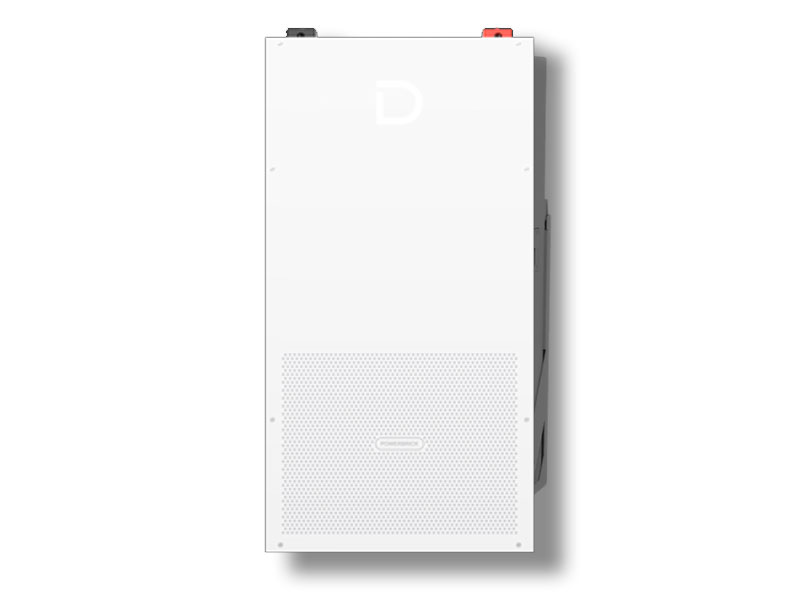
The Dyness PowerBrick features a compact, floor-standing enclosure suitable for residential and utility installations.
- Installation type: Floor-standing
- Dimensions: 435 × 233 × 857 mm
- Net weight: 114 kg
- Ingress protection rating: IP20
Environmental Operating Limits
- Charging temperature range: 0°C to 55°C
- Discharging temperature range: -20°C to 55°C
Typical Applications for the Dyness PowerBrick Battery
- Residential solar energy storage systems
- Hybrid solar and backup power installations
- High-capacity home energy storage
- Scalable low-voltage battery banks
FAQ
Frequently Asked Questions
What inverter sizes are commonly paired with the Dyness PowerBrick battery?
Because the PowerBrick offers a 280Ah capacity and up to 200A continuous discharge capability, it is commonly paired with medium to larger low-voltage inverter systems. Installer selection typically depends on expected continuous loads, surge behaviour, and whether additional batteries will be added for higher discharge capability.
Why is discharge current important when choosing an inverter?
Discharge current determines how much power the battery can deliver at a given moment. The PowerBrick’s 200A discharge rating allows it to support higher inverter loads compared to smaller batteries, while additional batteries in parallel further increase available power.
Can this battery support larger low-voltage inverters?
Yes. Larger low-voltage inverters can be used in correctly designed systems. When higher sustained output is required, installing multiple PowerBrick batteries in parallel increases both energy capacity and discharge current.
How many Dyness PowerBrick batteries can be connected together?
Up to fifty PowerBrick batteries can be connected in parallel, allowing very large low-voltage battery banks with capacities exceeding 700kWh.
Is the Dyness PowerBrick suitable for high daily energy usage?
Yes. With a 14.3kWh capacity and high allowable discharge current, the PowerBrick is well suited to homes with higher daily consumption or extended backup requirements.
Which inverter brands are compatible with the Dyness PowerBrick?
The Dyness PowerBrick is compatible with a wide range of inverter brands including SMA, Victron, GoodWe, Solis, Deye, SAJ, Voltronic, Sungrow, and others when configured with the correct communication protocol.
Does the battery include fire protection?
An optional aerosol fire protection system is available, providing an additional safety layer in residential energy storage installations.
Is the PowerBrick designed for daily cycling?
Yes. The battery is designed for daily charge and discharge operation and is rated for long-term cycling under standard residential operating conditions.






Reviews
There are no reviews yet.